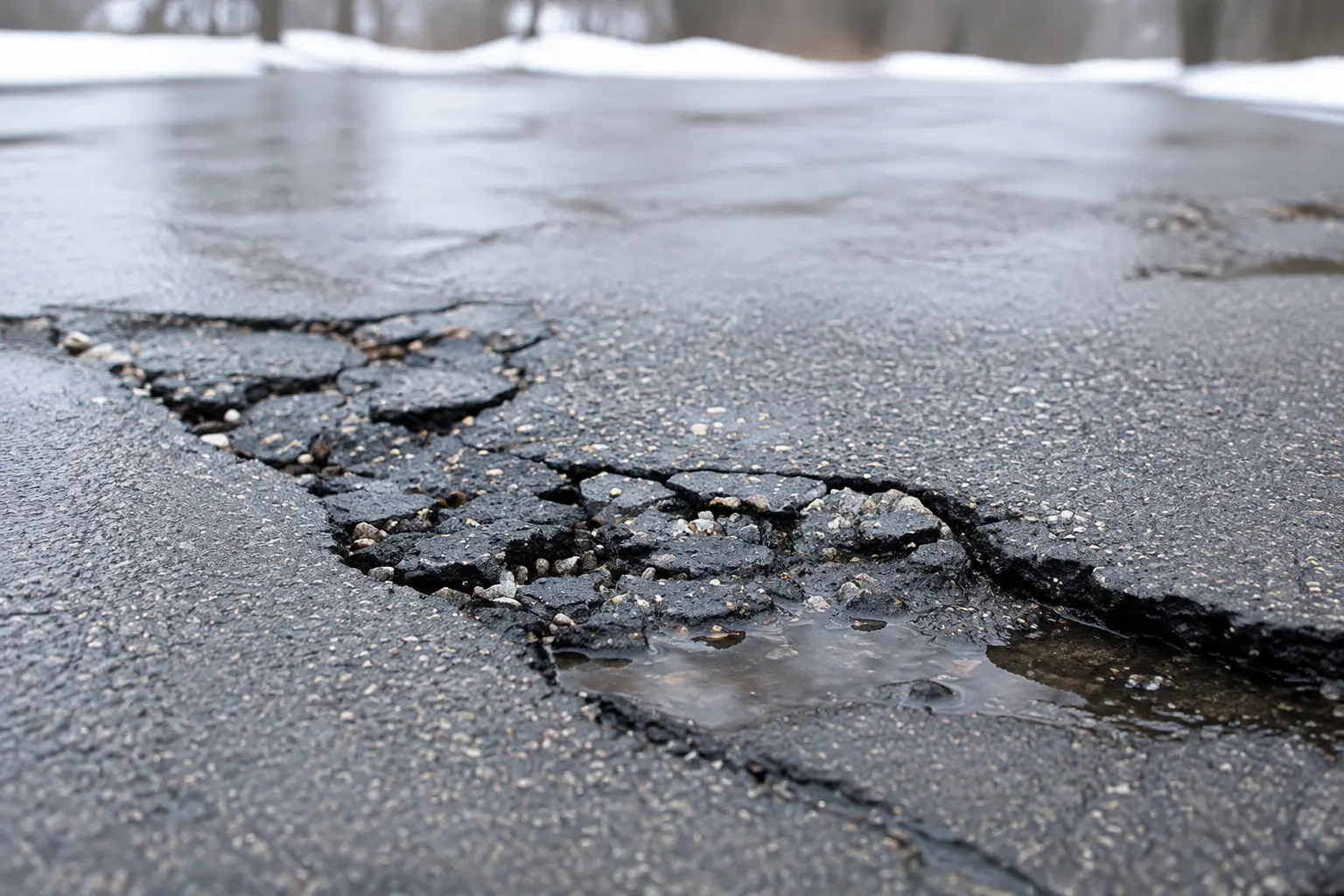
Freeze-thaw cycles destroy driveways because water seeps into small cracks, freezes, expands by about 9%, and forces those cracks wider with every cycle. Eastern Washington can go through dozens of these freeze-thaw cycles each winter, not just one hard freeze. Each cycle does a little more damage until a hairline crack becomes a pothole or the base underneath starts to fail.
Here’s what’s actually happening under your driveway, and how to stop it before it gets expensive.
What a Freeze-Thaw Cycle Actually Does
It starts small. A hairline crack, a pore in the asphalt, or a gap at the edge of the driveway lets water in.
When temperatures drop below freezing, that water turns to ice. Ice takes up more space than water does. As it expands, it pushes outward on the crack, making it wider.
When temperatures rise again, the ice melts. The crack is now slightly bigger than before, which means more water gets in next time.
Repeat that process 20 or 30 times over a Spokane winter, and a crack that started as a cosmetic issue becomes a structural one.
Why Spokane Winters Are Especially Hard on Asphalt
Not every climate does this kind of damage. Freeze-thaw cycling is worst in regions where temperatures swing above and below freezing repeatedly, rather than staying consistently cold.
Eastern Washington fits that pattern almost exactly. Daytime temperatures often climb above freezing even in the middle of winter, then drop back down overnight. That daily swing is what makes freeze-thaw damage so common here compared to regions with one long, steady freeze.
The Damage You Can See vs. the Damage You Can’t
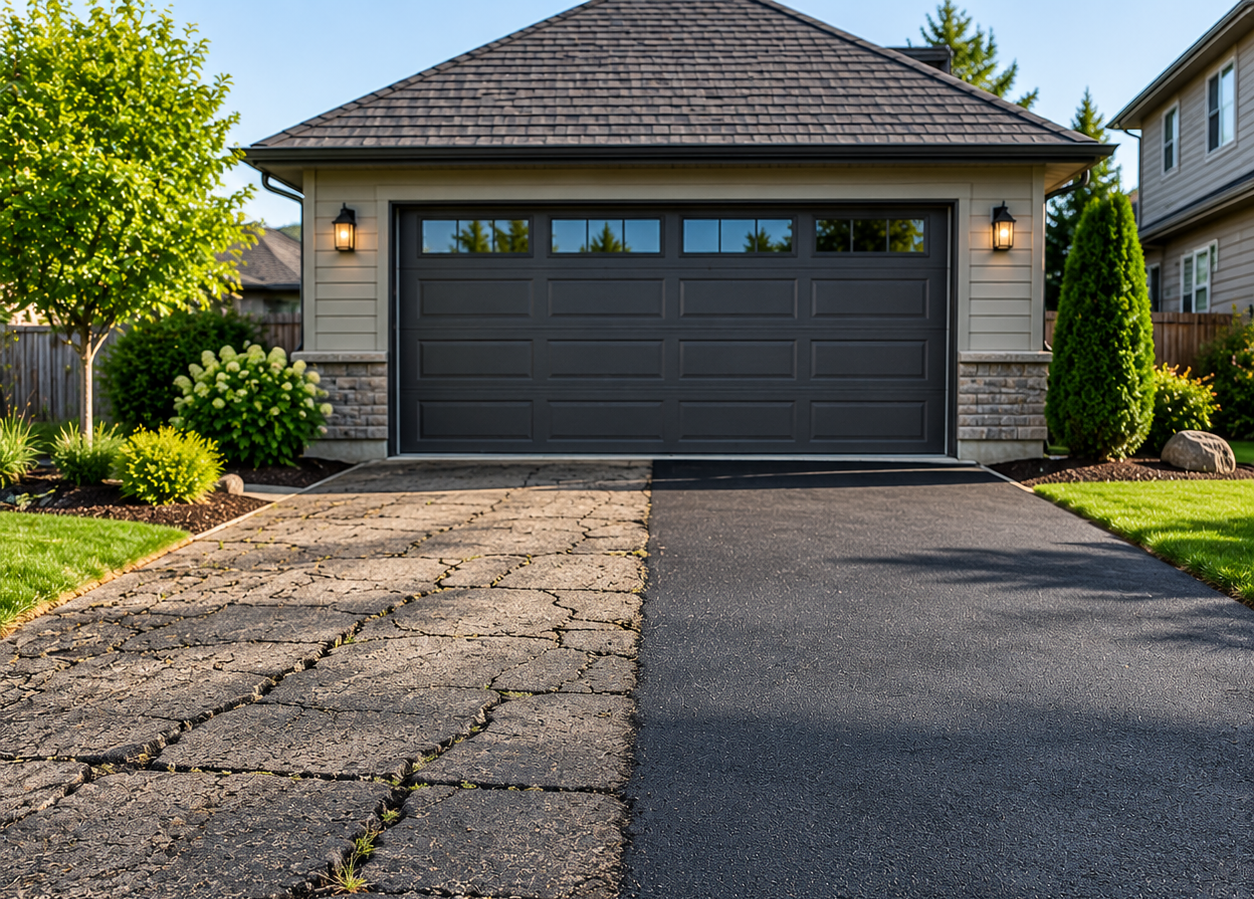
Surface-level damage shows up as:
- Hairline cracks along the surface or edges
- Color fading from black to gray
- Small potholes forming at existing cracks
Base-level damage is harder to spot but more expensive to fix:
- Soft or spongy spots near the edges of the driveway
- Standing water after rain, which points to drainage or grading problems
- Uneven or heaving sections, where the ground underneath has shifted
Base damage almost always means the gravel subbase underneath the asphalt has been compromised. That’s a much bigger repair than a simple crack fill, which is why catching problems early matters so much.
Why Proper Base Prep Matters More in Freeze-Thaw Climates
A driveway is only as strong as what’s underneath it. A compacted gravel subbase gives water somewhere to drain instead of pooling under the asphalt and freezing there.
Skipping or rushing this step is the single biggest reason driveways fail early in Eastern Washington. Asphalt poured over a weak or poorly compacted base will crack and settle within a few years, no matter how good the surface material is.
This is also why asphalt paving done right takes real preparation time before a single truck of asphalt shows up.
How to Protect a Driveway From Freeze-Thaw Damage
Seal Coating
A seal coat blocks water from getting into the surface pores in the first place. Reapplying every 3 to 5 years is the most cost-effective way to prevent freeze-thaw cracking before it starts. See seal coating for how this works.
Fixing Small Cracks Immediately
A hairline crack costs very little to seal. Left through even one Spokane winter, it can turn into a pothole or trigger base failure underneath.
Choosing the Right Surface for the Property
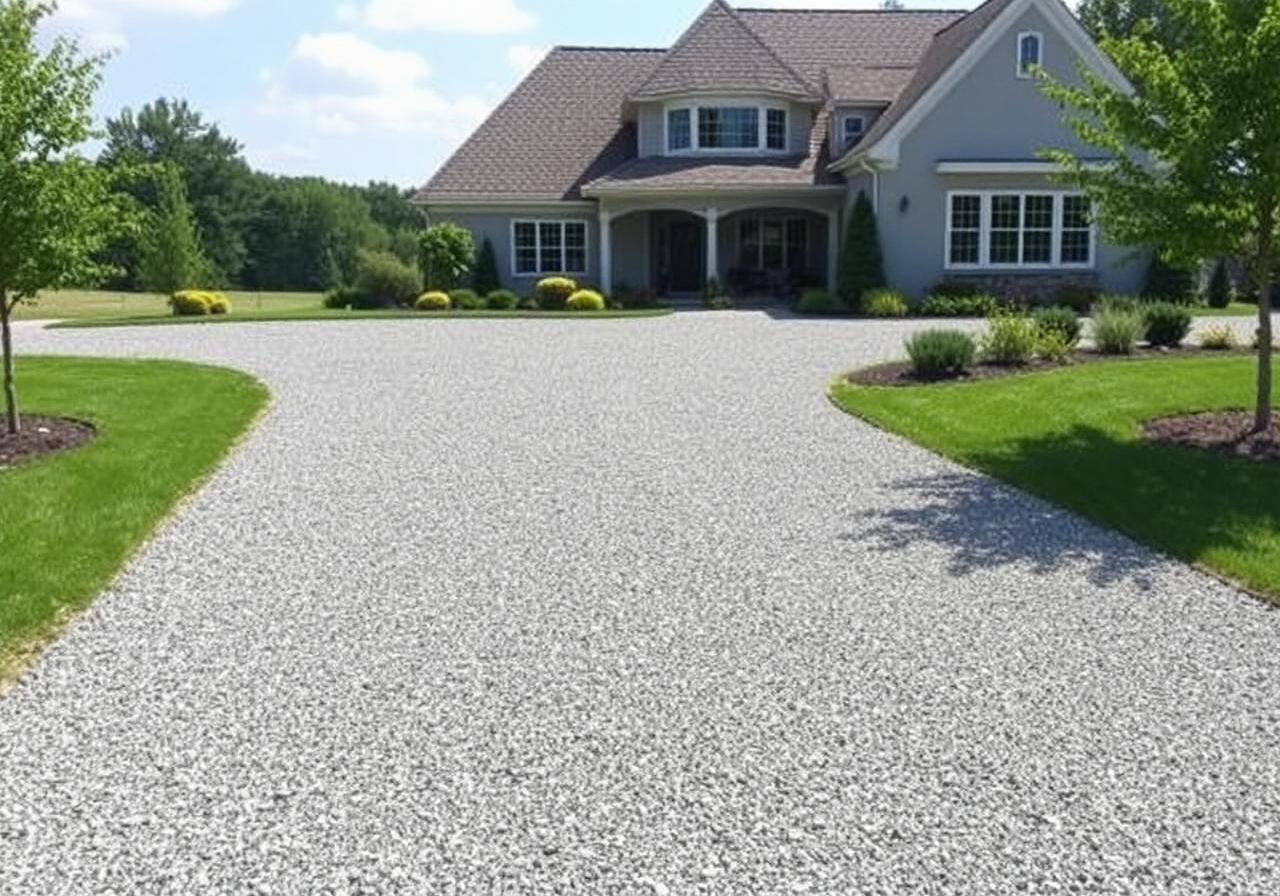
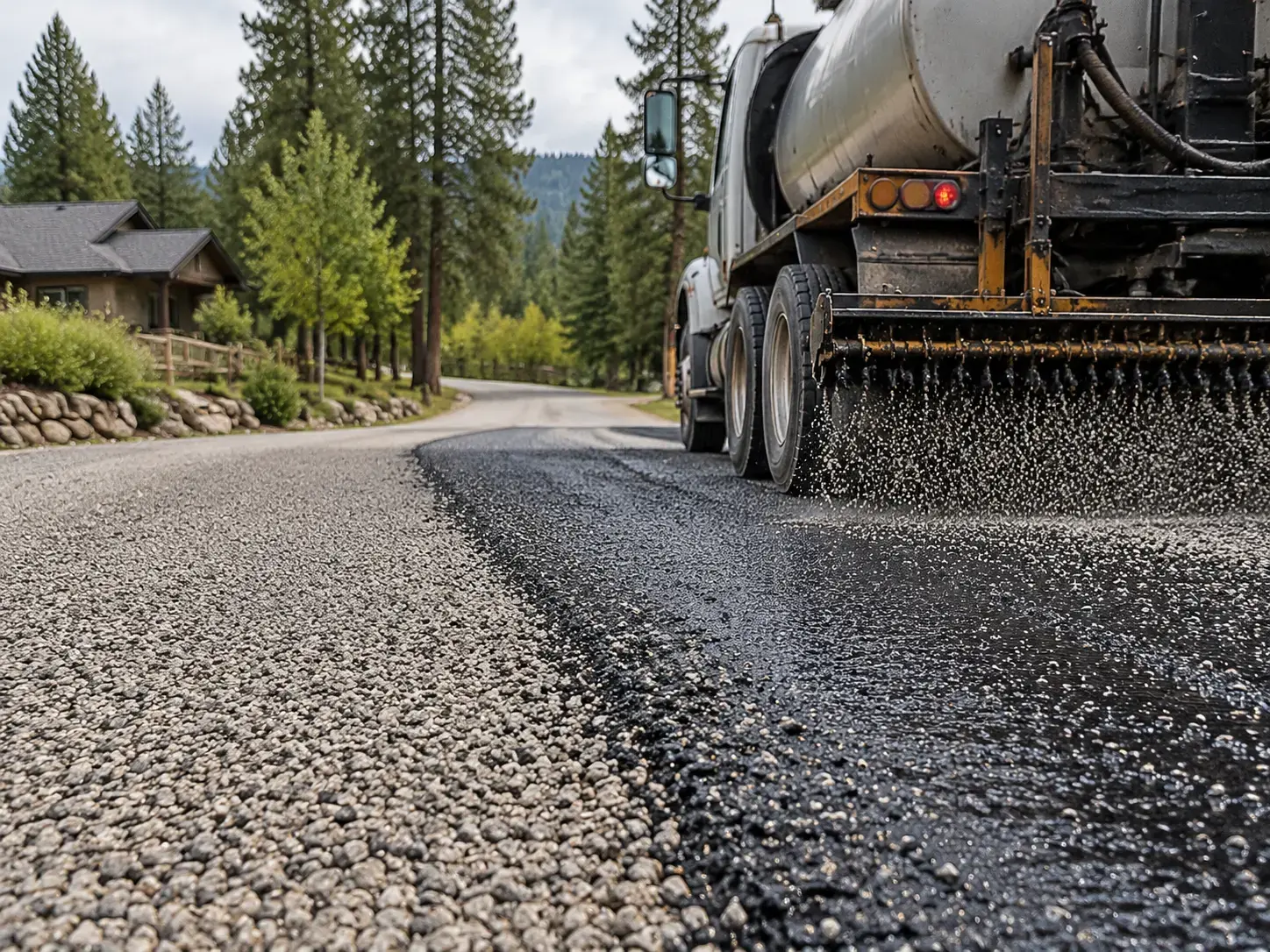
Long rural driveways handle freeze-thaw movement differently than short residential ones. Chip seal uses aggregate that flexes slightly with ground movement, which makes it a strong option for longer driveways and acreage properties.
Proper Grading and Drainage
Water that can’t drain away from the driveway has nowhere to go but into the surface. Correct grading during installation prevents the pooling that leads to base damage.
Frequently Asked Questions
Why does my driveway get worse every winter?
Each freeze-thaw cycle widens existing cracks a little more. Without repair between winters, damage compounds year over year instead of staying the same.
Can freeze-thaw damage be prevented completely?
Not entirely, but it can be slowed significantly with proper base prep, correct drainage, and seal coating on a regular schedule.
Is chip seal or asphalt better for freeze-thaw climates?
Both handle freeze-thaw movement well when installed correctly. Chip seal’s aggregate surface flexes slightly with ground movement, which makes it a strong fit for longer driveways. Asphalt gives a smoother, more solid surface better suited to shorter, high-traffic driveways.
How do I know if freeze-thaw damage is cosmetic or structural?
Fading and hairline cracks are usually cosmetic and can be sealed. Soft spots, standing water, or uneven sections usually point to base damage, which needs a professional assessment.
How often should I seal coat my driveway in Spokane?
Every 3 to 5 years, depending on sun exposure and traffic. Waiting until damage is visible usually means the UV and moisture damage has already started underneath.
Noticing cracks, fading, or soft spots on your driveway? Request a free on-site estimate and Cornerstone Paving WA will tell you straight whether it needs a seal coat, a repair, or nothing yet.