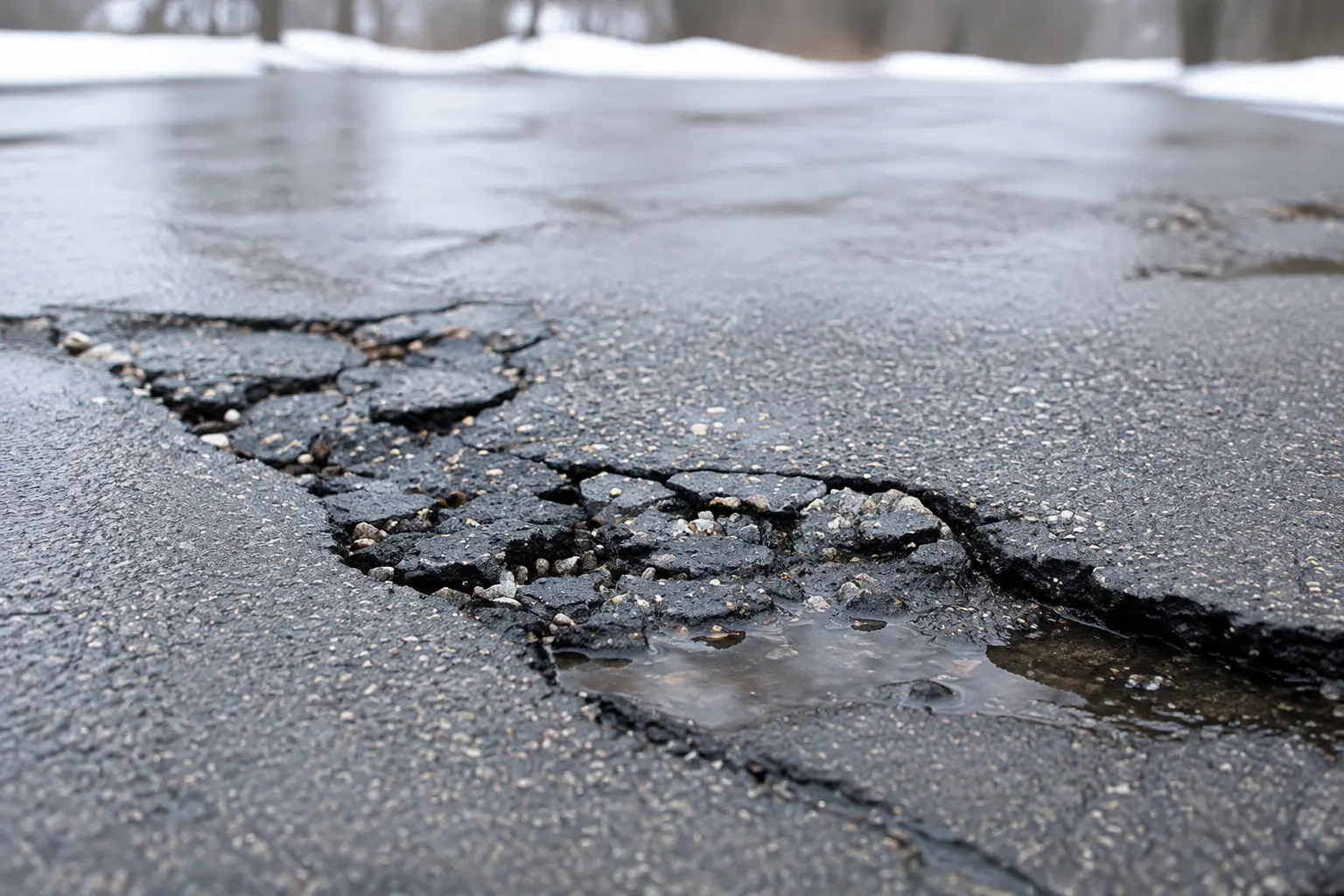
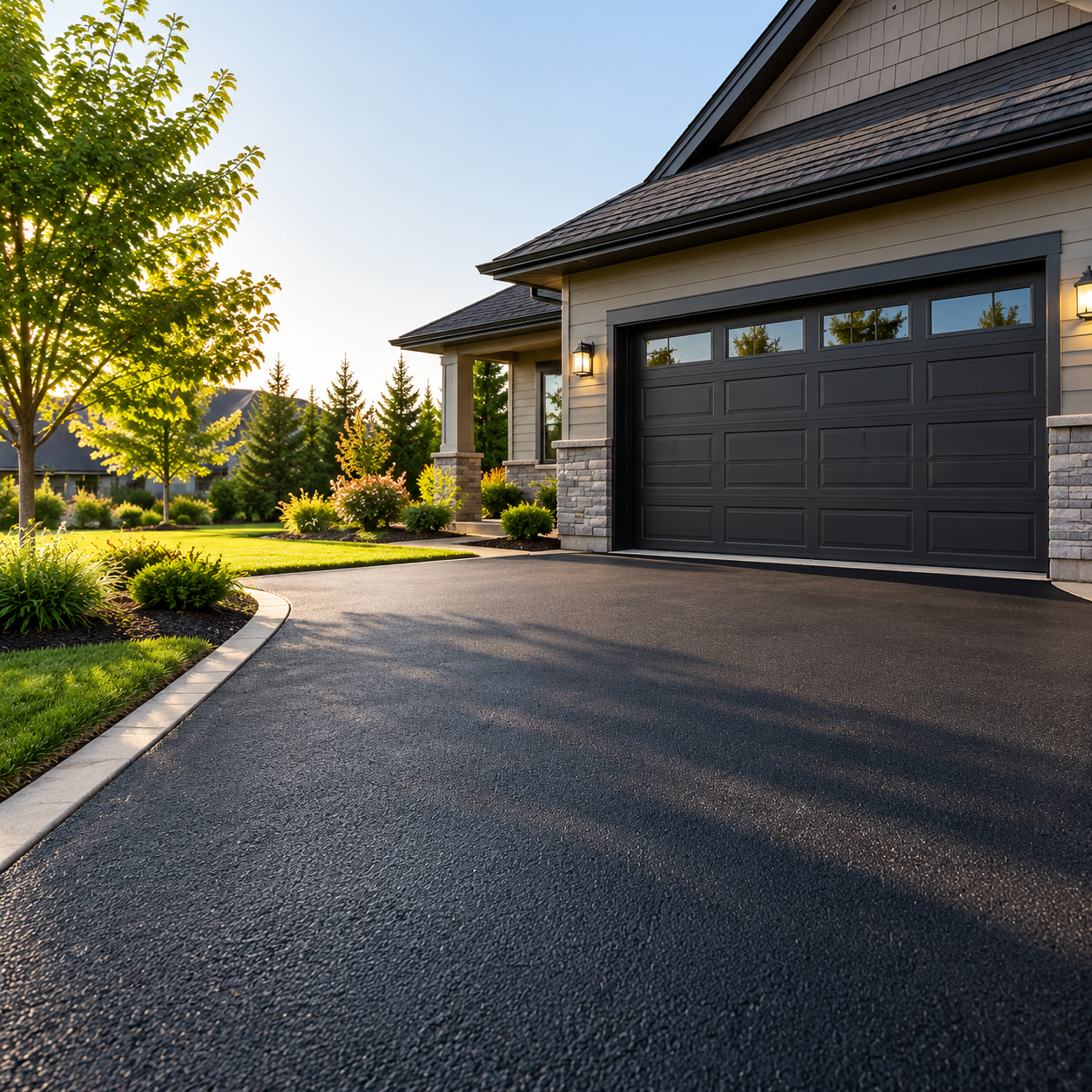
Small, isolated cracks under a quarter inch wide can usually be repaired with crack sealing or patching. Widespread cracking, potholes, sinking sections, or a driveway older than 15 to 20 years is typically a sign that replacement will save more money long term than repeated repairs.
Every Spokane homeowner with a cracked driveway eventually asks the same question: is this something a repair can fix, or is it time to replace the whole thing? The answer depends less on how the crack looks and more on what’s happening underneath it. Here’s how to tell the difference.
Why Driveways Crack in Spokane
Spokane’s freeze-thaw cycle is the main culprit behind most driveway cracking. Water seeps into small cracks or porous spots, freezes, and expands, widening the crack further with every cycle. Over a winter or two, a hairline crack can turn into a structural problem. Other common causes include:
- Poor original installation, especially inadequate base compaction or insufficient asphalt/concrete thickness
- Tree root intrusion, which pushes up and cracks the surface from below
- Heavy vehicle loads on a driveway not designed for that weight
- Natural aging, since even a well-installed driveway has a lifespan
Understanding the cause matters because it tells you whether a repair will actually hold or just delay a bigger repair later.
Signs You Can Repair Your Driveway
A repair is usually the right call when the damage is limited and the base underneath is still solid. Look for:
1. Hairline to quarter-inch cracks
Thin, isolated cracks that haven’t spread into a network of connected cracks are good candidates for crack sealing.
2. Surface-level damage only
If the crack doesn’t have crumbling edges, doesn’t rock or shift when you press on it, and the surrounding surface is still flat, the base is likely intact.
3. A driveway under 10 to 12 years old
Younger driveways with isolated damage typically have more structural life left, making repair a cost-effective option.
4. No standing water or drainage issues
If water isn’t pooling near or in the cracked area, the drainage and grading are still doing their job.
5. Cracks are new, not recurring
If this is the first time you’ve noticed cracking in this spot, sealing it promptly can prevent the freeze-thaw cycle from making it worse.
Signs You Need to Replace Your Driveway
Replacement is usually the better investment when the damage points to a failing base rather than surface wear. Watch for:
1. Alligator cracking
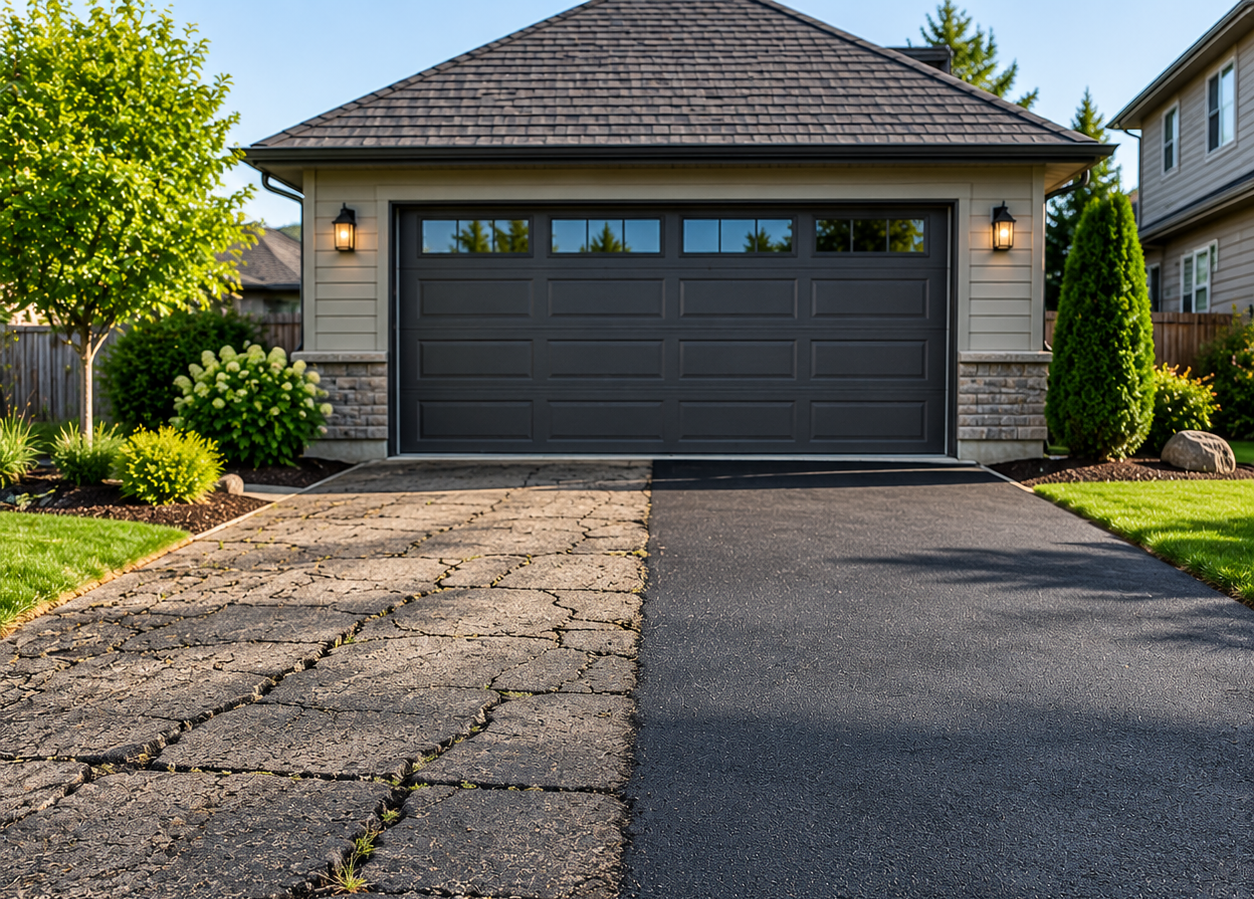
A web of interconnected cracks resembling alligator skin signals the base underneath has broken down, and surface repairs won’t fix that.
2. Potholes or sunken sections
These indicate the base material has shifted or eroded, which patching can only mask temporarily.
3. A driveway older than 15 to 20 years
Even well-maintained asphalt and concrete have a lifespan. Past that point, repairs become short-term fixes rather than real solutions.
4. Cracks that keep coming back
If you’ve sealed or patched the same area more than once and it keeps reopening, the underlying problem hasn’t been addressed.
5. Drainage problems or pooling water
Water sitting on or near your driveway accelerates freeze-thaw damage and often means the original grading has failed.
6. Multiple large cracks across the surface
Widespread damage, rather than one or two isolated spots, usually means it’s more cost-effective to replace than to chase repairs indefinitely.
Repair vs. Replace: A Quick Comparison
| Repair | Replace | |
| Best for | Isolated, surface-level cracks | Widespread damage, failed base |
| Typical cost | Lower upfront cost | Higher upfront, lower long-term cost |
| Lifespan added | 1 to 3 years, depending on cause | 15 to 30 years, depending on material |
| Underlying base | Assumed to still be sound | Rebuilt from the ground up |
What Happens If You Ignore a Cracked Driveway
Cracks don’t stay the same size, especially in Spokane’s climate. Water gets into the crack, freezes, and widens it a little more with each cycle. What starts as a $200 to $400 repair can turn into a full replacement within a few winters if left unaddressed. Addressing cracks early, even small ones, is one of the most cost-effective things a homeowner can do.
How a Professional Assessment Helps
Because the real question isn’t what the crack looks like, but what’s happening beneath it, a professional inspection is the most reliable way to know for sure. A qualified contractor can check the base condition, drainage, and crack pattern to give you an honest recommendation instead of guessing based on surface appearance alone.
FAQ
Can I repair a cracked driveway myself?
DIY crack sealant can work for very minor, hairline cracks, but it won’t address base issues, and improper application can trap water and worsen the problem.
How much does driveway crack repair typically cost?
Costs vary based on crack size and quantity, but minor crack sealing is generally far less expensive than patching sunken sections or full replacement.
How do I know if my driveway’s base has failed?
Signs include sinking or uneven sections, cracks that return after repair, and soft or spongy spots when you walk or drive over them. These typically require replacement rather than surface repair.
Is it cheaper to repair a driveway multiple times or replace it once?
Repeated repairs on a failing base often cost more over time than one full replacement, since each repair only addresses the surface while the underlying problem continues.
How long does driveway replacement take in Spokane?
Most residential driveway replacements take a few days to a week, depending on size, weather, and curing time for the chosen material.