To get your pavement ready for winter, clean the surface, seal cracks, fix drainage problems, sealcoat if it’s due, and clear debris before temperatures drop. Water that gets into small cracks freezes, expands, and turns minor damage into costly repairs. Fall is the best window to act.
It’s mid-October, which means the window for pavement work is closing. Once nights stay near freezing, most sealing and repair products can’t cure properly.
Here’s a simple checklist to get your driveway or lot ready.
Why Winter Is Hard on Pavement
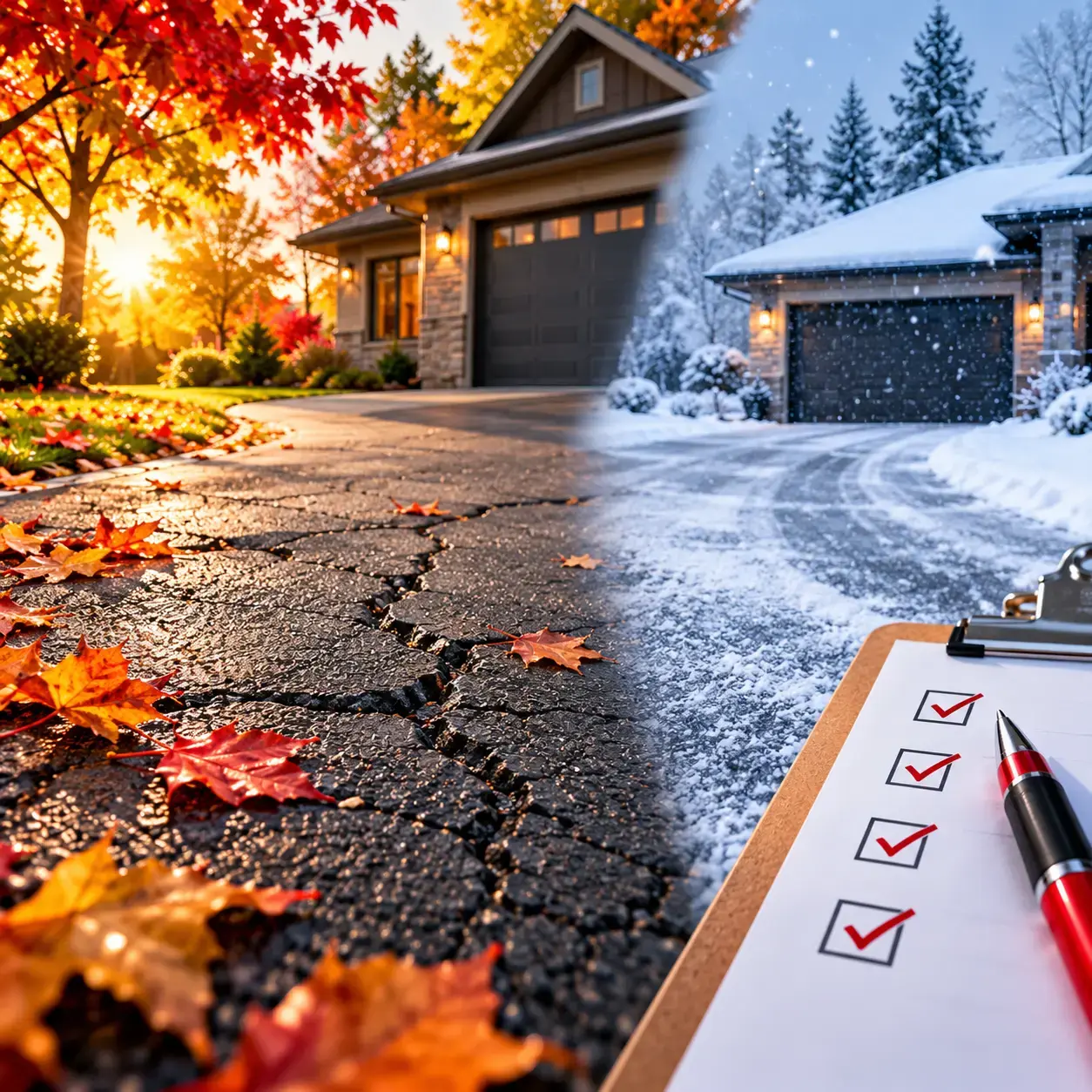
Water is the main problem. It seeps into cracks and porous spots, then freezes and expands.
Each freeze-thaw cycle widens the crack a little more. Over one winter, a hairline crack can become a pothole.
Washington’s mix of rain, snow, and temperature swings makes this worse, especially in eastern WA, where freeze-thaw cycles are frequent.
The Winter Pavement Checklist
1. Walk the Surface and Look for Damage
Check your driveway in daylight, ideally after rain. Look for:
- Cracks wider than a quarter inch
- Connected cracks that look like alligator skin
- Sunken or uneven spots
- Crumbling edges
- Potholes
Mark each problem area with chalk so you can point it out to a contractor.
2. Clean the Surface
Remove leaves, dirt, moss, and oil stains. Debris holds moisture against the pavement and keeps water from draining.
Sweep first, then rinse with a hose. Let the surface dry fully before any sealing work.
3. Seal Cracks Before the Freeze
Crack sealing is one of the cheapest ways to protect pavement. It keeps water out of the base layer, where most freeze damage starts.
Sealant needs dry, mild weather to bond. Don’t wait for December.
4. Check Your Drainage
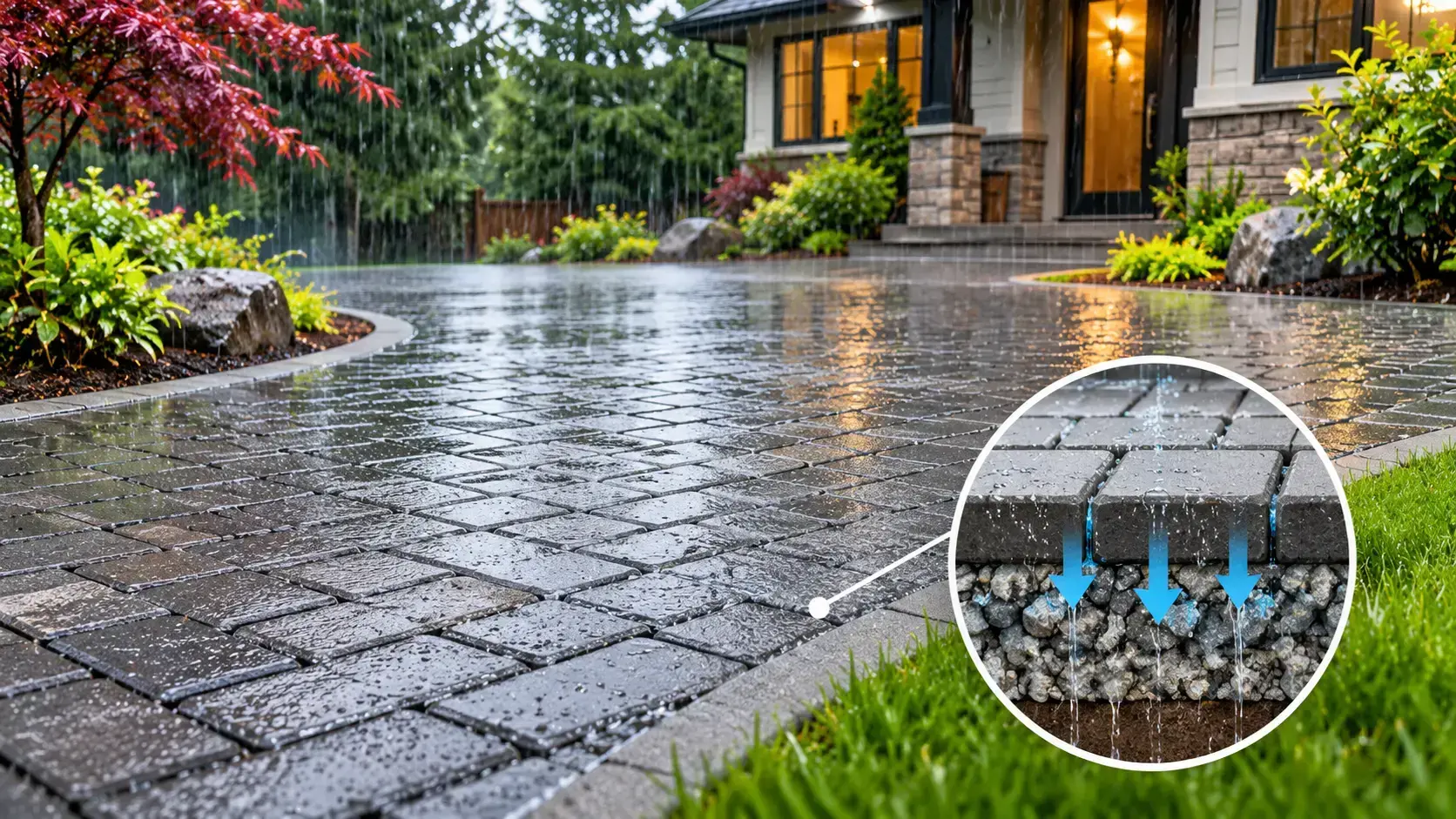
Water should move off the pavement and away from the edges. Watch where it goes during the next rain.
Warning signs include:
- Puddles that stay for hours after rain
- Water pooling near the garage or foundation
- Soil washing out along the edges
Standing water freezes into ice and speeds up surface breakdown.
5. Decide Whether Sealcoating Is Due
Sealcoating adds a protective layer against water, UV, and oil. Most asphalt driveways benefit from it every few years.
If your driveway is newer than six months, it likely needs to cure first. If it’s older and faded to gray, it may be due.
Sealcoating also needs warm, dry days to cure properly, so timing matters.
6. Fix Potholes and Sunken Areas Early
Small potholes grow quickly once water and traffic reach the base. Patching them in fall prevents bigger repairs in spring.
If the same spot keeps failing, the base underneath may need work. That’s a job for a professional.
7. Trim Back Trees and Roots
Roots push up from below and crack pavement. Overhanging branches drop leaves and keep the surface damp.
Trim branches over the driveway and watch for roots lifting any section.
8. Mark the Edges for Snow Removal
Place driveway markers along the edges before the first snowfall. This helps plows and shovels avoid damaging the edges.
Use a plastic shovel or rubber-edged blade. Metal blades can gouge asphalt.
9. Plan Your De-Icing Approach
Some de-icers can damage pavement, especially on concrete and newer asphalt. Sand adds traction without chemical wear.
If you use a de-icer, apply it sparingly and sweep up the excess in spring.
What to Do If Your Pavement Is Past Repair
Some damage can’t be fixed with sealing. Replacement is usually the better call when you see:
- Alligator cracking across large areas
- Multiple sunken sections
- Repeated failures in the same spot
- A driveway past 15 to 20 years old
A professional can check the base and give you an honest recommendation. If you’re comparing contractors, our guide to choosing a paving contractor in Spokane explains what to look for.
When to Call a Professional
Call a contractor if:
- Cracks are wider than a quarter inch
- You see potholes or sunken areas
- Water pools and doesn’t drain
- You’re unsure whether to repair or replace
Our post on cracked driveways: repair vs. replace can help you decide before you call.
Frequently Asked Questions
What temperature is too cold for sealcoating or crack sealing?
Most products need temperatures above roughly 50°F, with dry weather before and after. Check the product label.
Can I seal my driveway in November?
It depends on your area’s weather. In many parts of WA, temperatures are too low by then, so earlier is safer.
Does a small crack really matter before winter?
Yes. Water enters small cracks, freezes, and widens them. Sealing early costs far less than repairing later.
Is rock salt bad for my driveway?
It can be, especially on concrete and newer asphalt. Sand or a pavement-safe de-icer is a gentler option.
How do I know if my driveway needs replacement?
Widespread cracking, sunken sections, and repeated failures point to a failing base. A professional inspection confirms it.